True, but the great advantage of using water is its much greater thermal conductivity and specific heat, both of which mean that it is many times more effective than air at cooling things down, especially in restricted spaces.
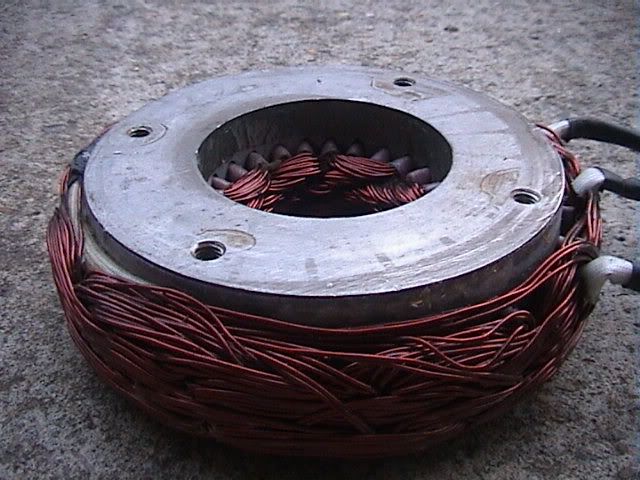
I was surprised at just how effective a water-cooled face plate works when I tried one on a small motor. The ME0913 lends itself to this well, as the stator is bolted directly to the alloy case, via this large area: http://i37.photobucket.com/albums/e62/ripperton_2008/Electric%20R1/DSC00070.jpg?t=1299877424 which should lend itself well to an add-on water cooling system. Something like two mating alloy plates, with one having grooves milled into one face, bolted together with sealant would do the job nicely. Circulate water around it, maybe via a small pump and a hull-mounted cooling plate heat exchanger if you're in sea water, or perhaps just pump freshwater around it directly if you on rivers and lakes.
Jeremy
--- In electricboats@yahoogroups.com, danbollinger <no_reply@...> wrote:
>
> Direct cooling with water is ideal, provided you deal with the obvious difficulties. An alternative is to indirectly cool with water. Cool the motor with air that is chilled by water. Water is generally cooler than the ambient air. A simple pump and radiator will chill the air. No fancy motor or motor parts needed.
>
> --- In electricboats@yahoogroups.com, "Jeremy" <jeremy_harris_uk@> wrote:
> >
> > It's a viable cooling strategy, if you can get the cool water where it's needed. It's the motor windings that generate the heat, so finding a way to get coolant as close to them as possible is key.
>


No comments:
Post a Comment